Family Linens
Dana Caldera
September 3 - 27, 2026
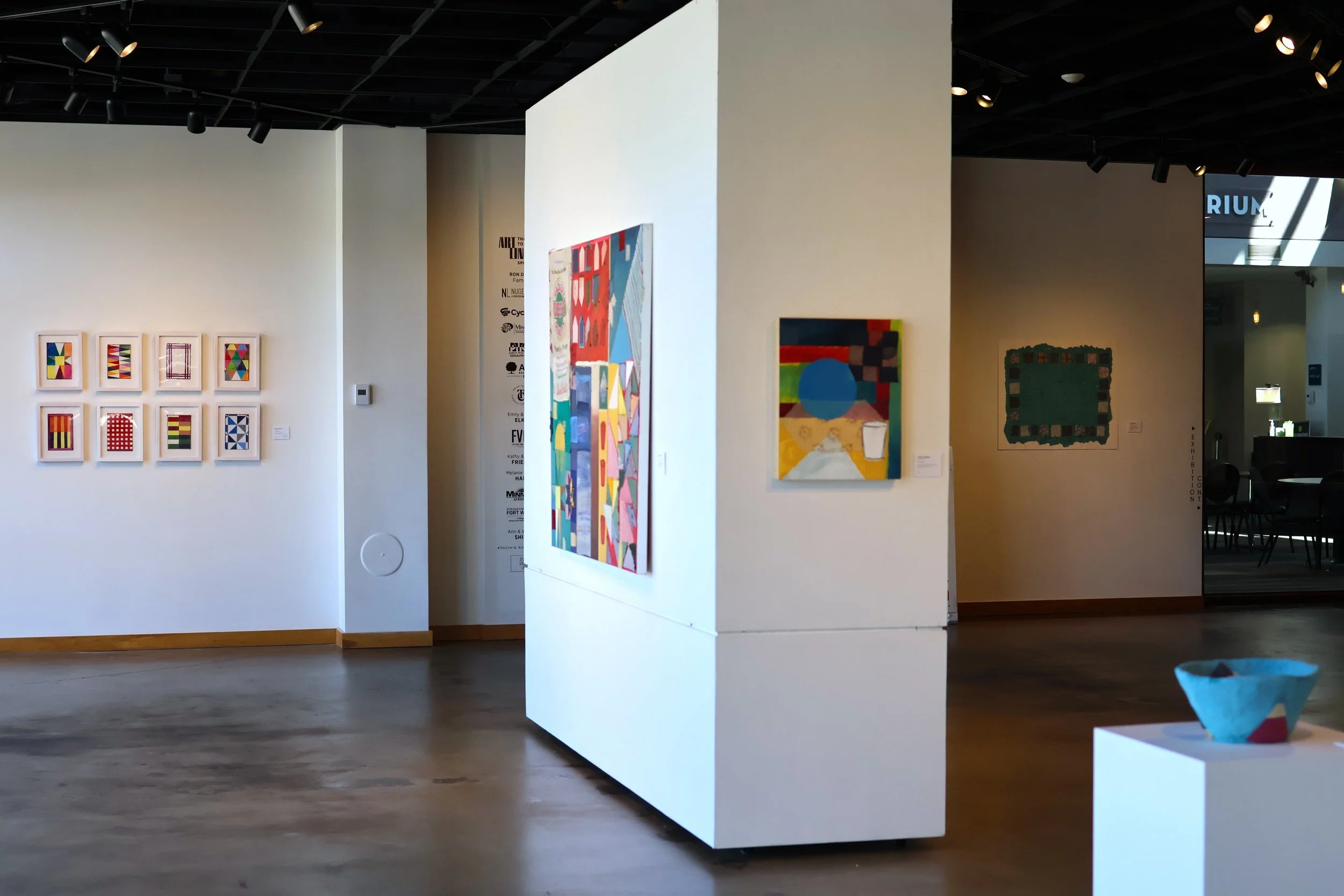
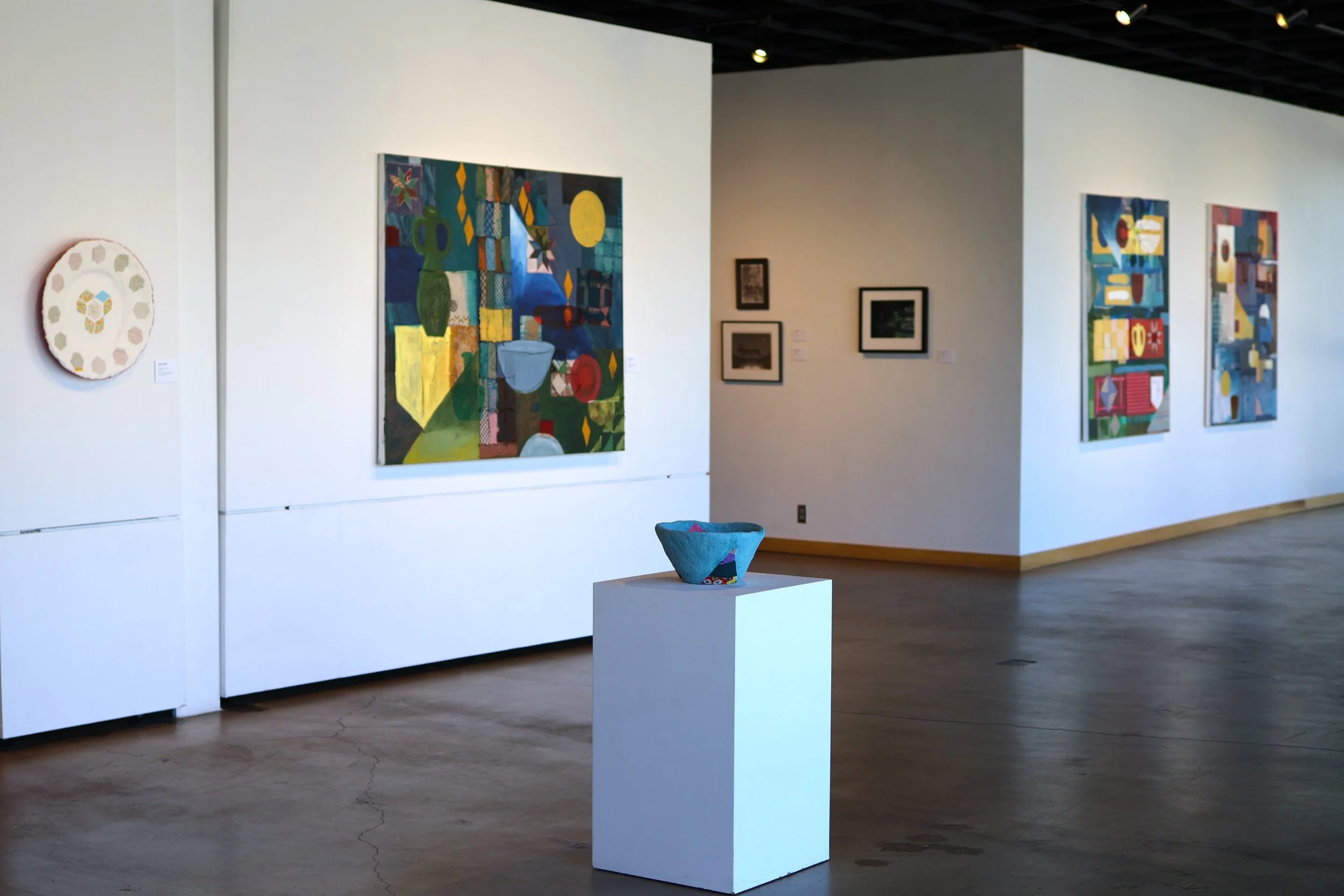
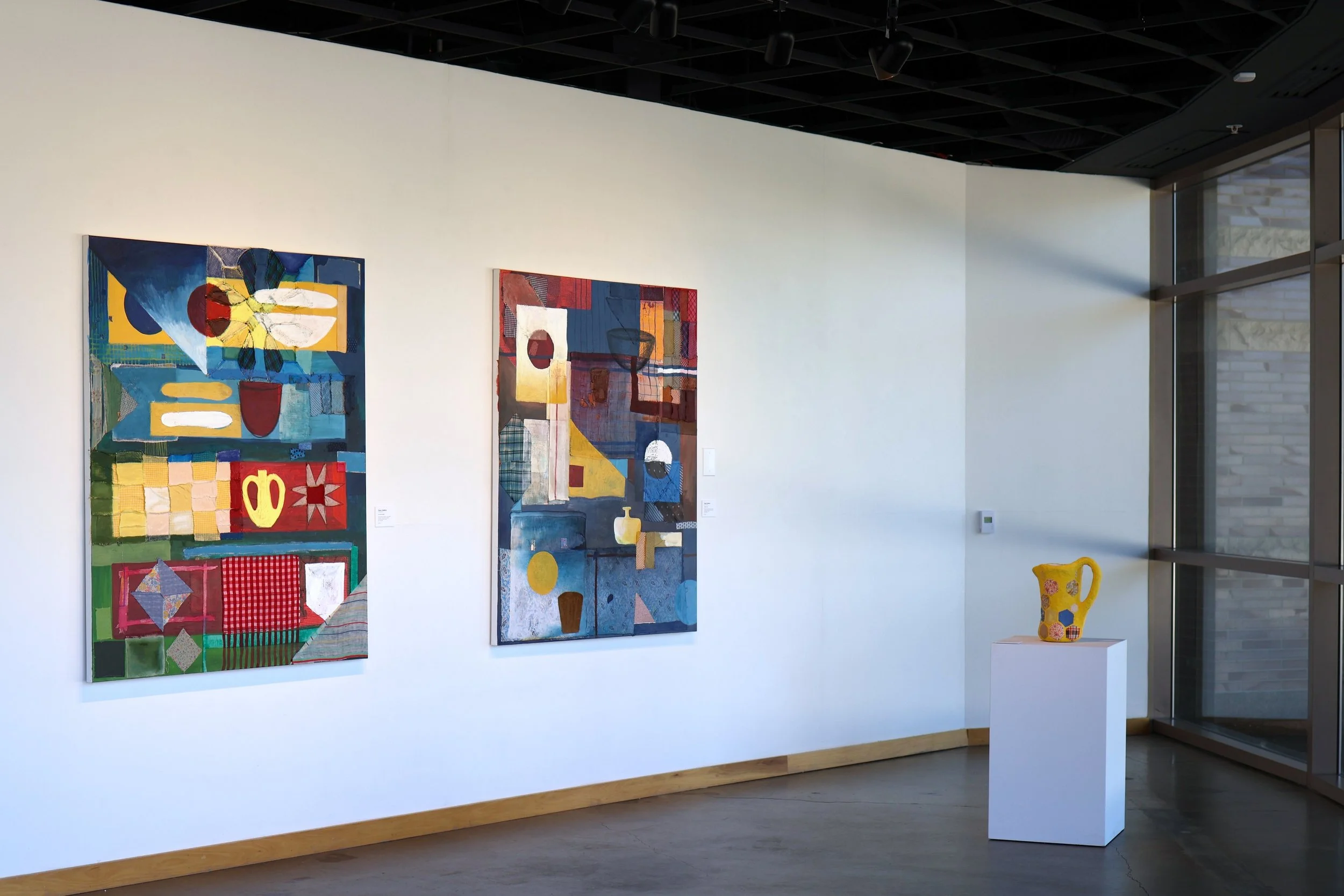
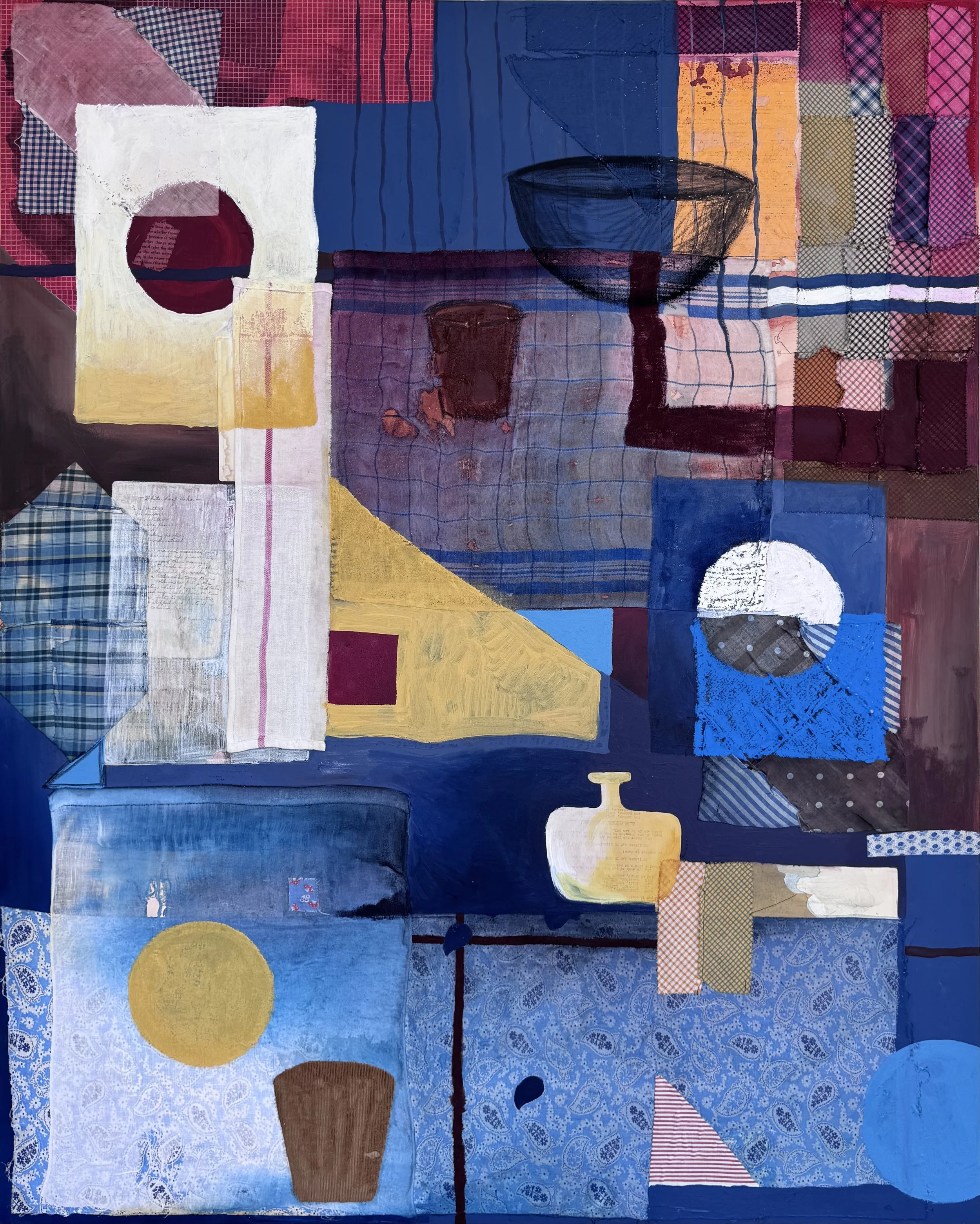
Dana Caldera, "A Table for Six," acrylic paint, found fabric, found paper, oil pastel, colored pencil, graphite, tissue paper on canvas, 60 x 48 inches.
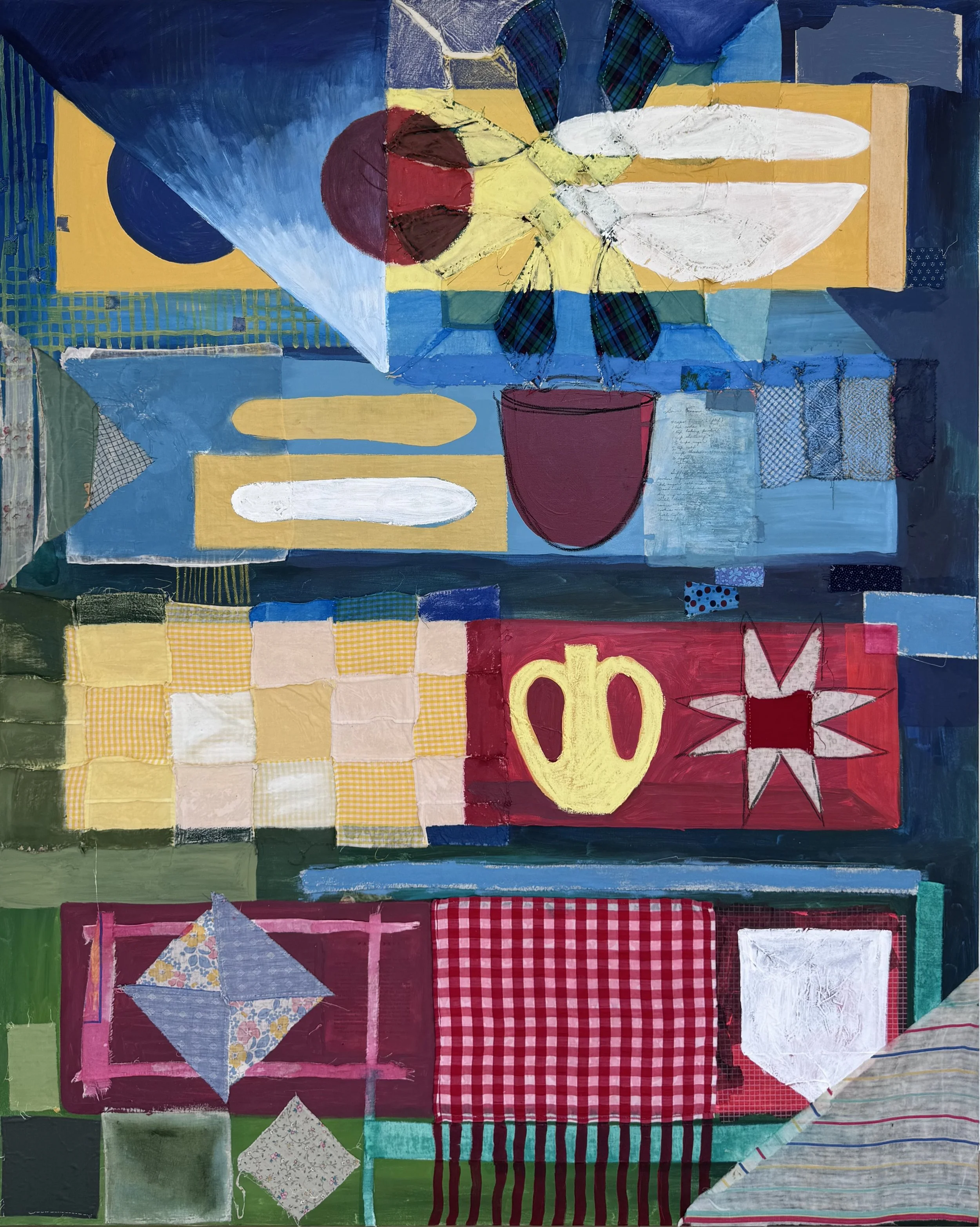
Dana Caldera, "Our China Cabinet," acrylic paint, found fabric, found paper, oil pastel, colored pencil, graphite, tissue paper on canvas, 60 x 48 inches.
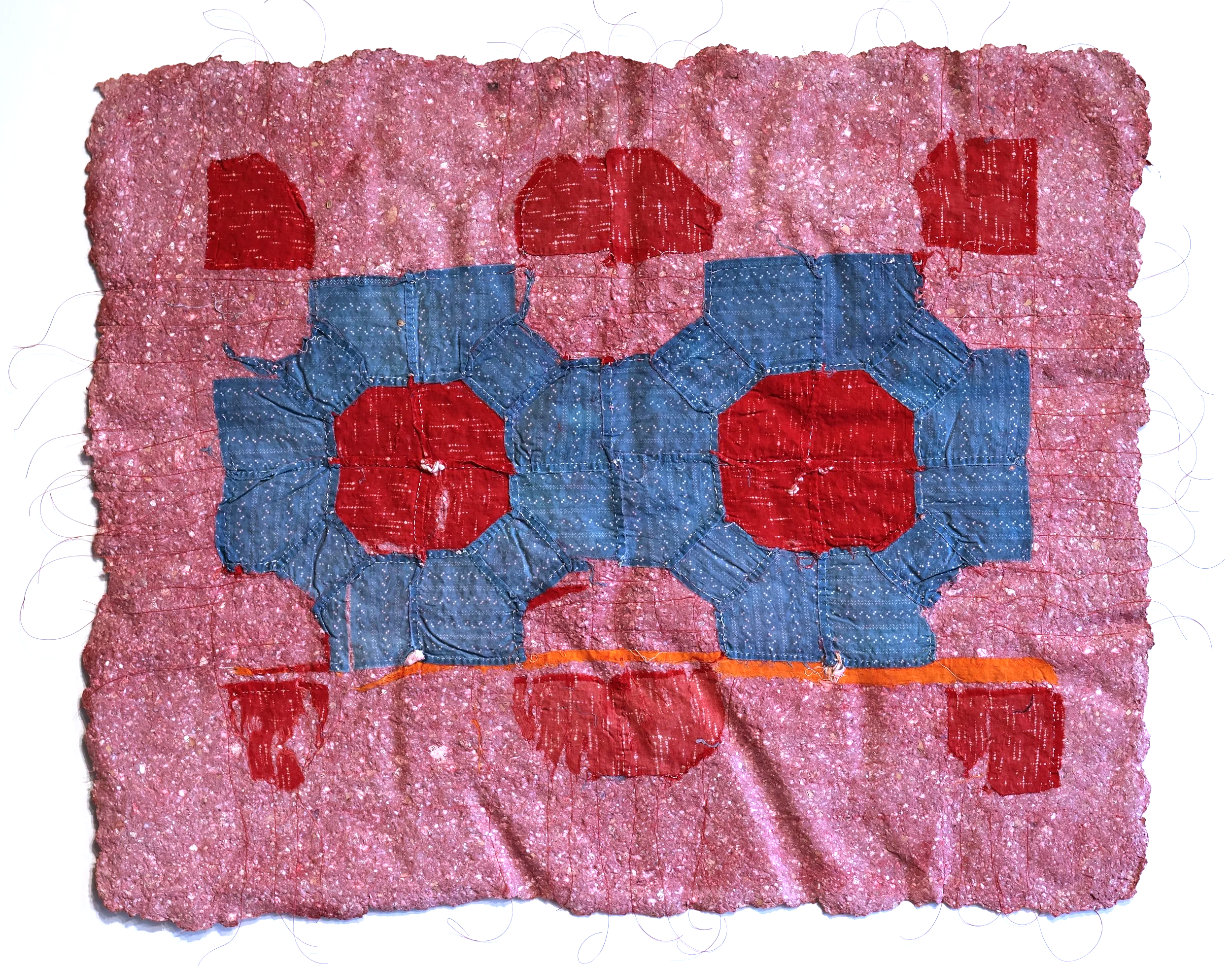
Dana Caldera, "You Stack the Blocks Just So," handmade paper made from pulp with found paper, virgin cotton, dryer lint, pigment, with found fabric and quilting thread inclusions, 22 x 33 inches.
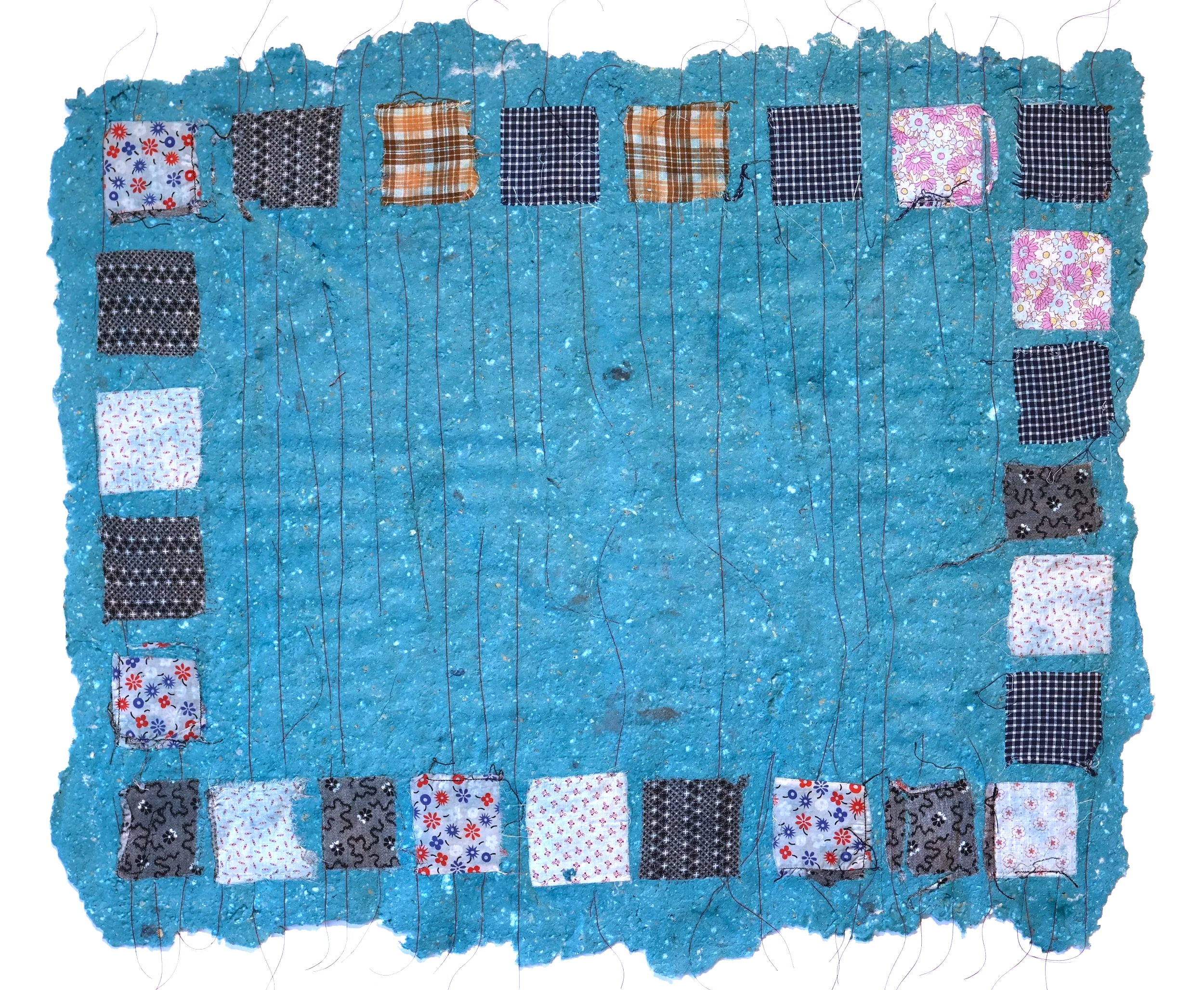
Dana Caldera, "I Wipe Your Hands, Your Tears," pigmented handmade paper made from pulp with found paper, virgin cotton, and dryer lint, with torn apron ties and quilting thread inclusions, 22 x 33 inches.
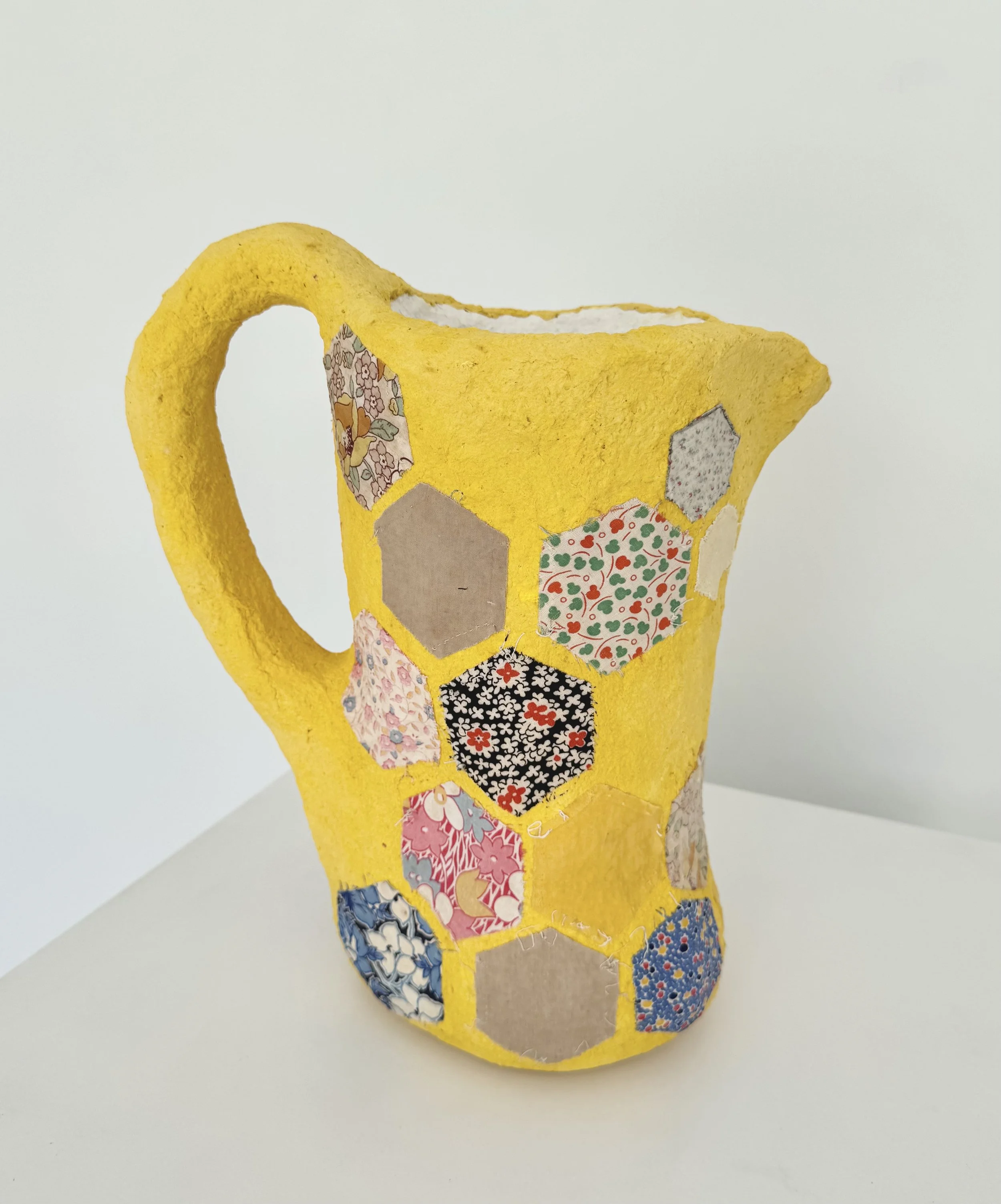
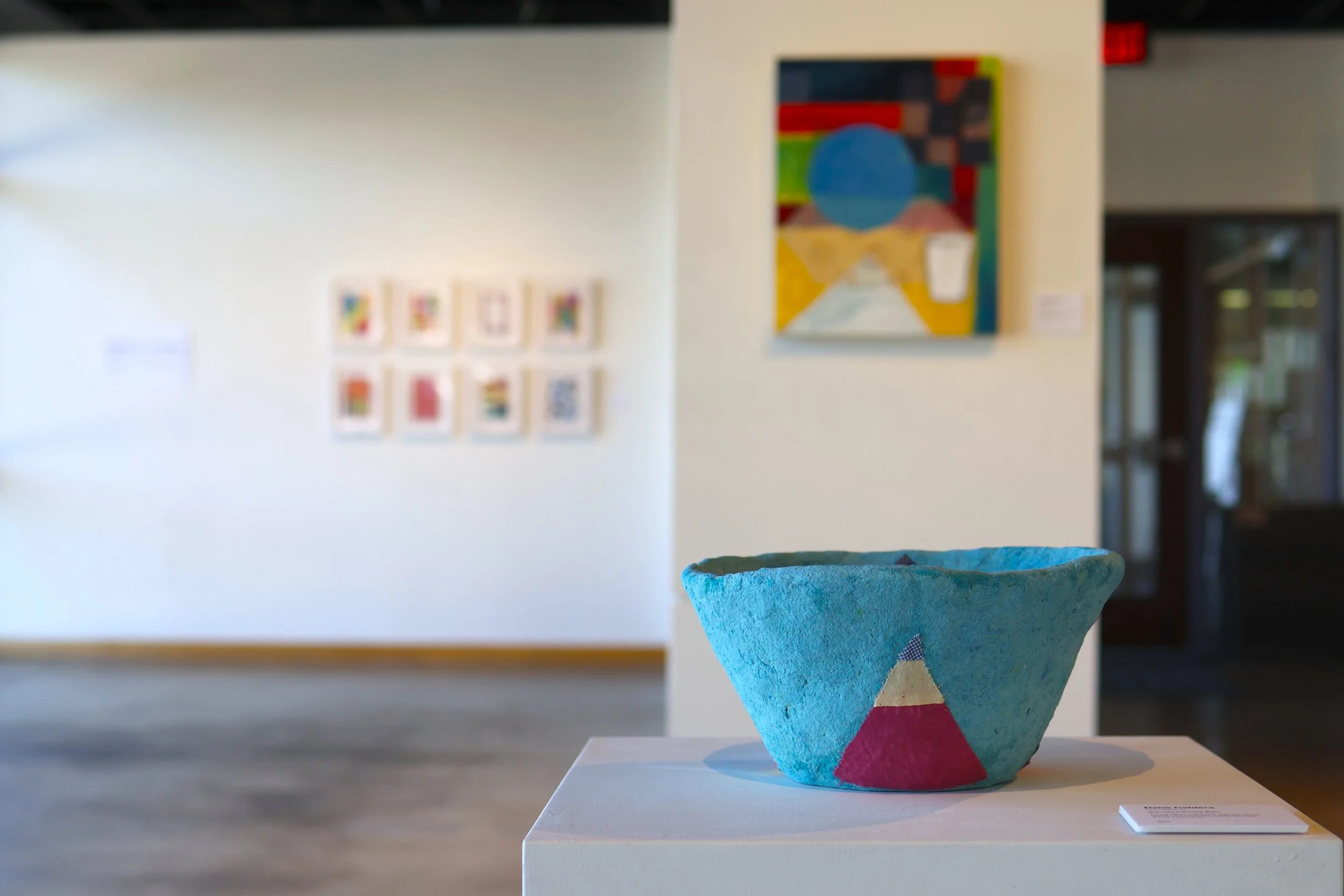
Dana Caldera, "Lemonade After School," found fabric, paperclay, pigment, found vessel, aluminum foil, plaster bandage.
Video by Jeffrey Crane with BFA Commercial
Family Linens
Dana Caldera
The work for Family Linens took shape over the last three years as I moved away from my childhood home and established life with my family in Fort Wayne while taking on the roles of homemaker and primary caregiver to our children. This shift in my responsibilities has brought to the forefront my place as the family memory keeper and memory maker. In turn, I have embraced storytelling in my artwork through the use of iconography and symbols that represent memories of my family growing up. I think about the family stories and rituals that my parents shared with me, how those have been filtered through my memories, and now as a parent, how I want to adapt those stories and rituals into traditions for my family.
In Family Linens I present work created with several different material processes whereby I am exploring fiber art through the relationship between paper and fabric, specifically how they can be intermixed. I have included work from 4 ongoing series: handmade paper linens, mixed media paintings, pastel drawings, and paperclay vessels. The symbols in the work appear as dishware, table linens, table settings, and other scenes of the kitchen and dining table, which serve as the setting for many of my childhood rituals and traditions that I find myself reaching for and reinventing today as I raise my own children.
Many of my formative childhood memories center on the family table: gathering for family birthdays, holidays, reunions, barbecues, and parties. We often joked that in my dad’s family we planned what we would have for the next meal before we left the table from the previous one. In my mom’s family, Grandma Ann’s recipe for cornbread stuffing was served at every Thanksgiving and became so engrained in our holiday ritual, that once the cousins were grown and living independently, we noted that the stuffing had been made and served at our tables all over the world.
While my family memories are closely tied to the kitchen, so too is much of the labor I do as a homemaker. Are domestic activities leisure, labor, or some third entity? This question was posed by Sarah Archer on Sarah Marshall’s podcast, You’re Wrong About on Martha Stewart, in 2022, and I think about it daily. The work I do in the home, specifically in the kitchen, is irrevocably tied to my homemaking duties, care for my children, a connection to my family traditions, and a form of art that I truly enjoy. Some days it is my only outlet for creative work, as the kitchen and dining table act as a studio of sorts.
I find enjoyment in passing family customs on to my children; I feel burdened by the daily responsibility of feeding and tending to my family. Meanwhile, the act of hosting and gathering around the table, picking the place-settings, planning a menu, sharing a dish with love, and teaching my children about my favorite childhood traditions, is both an art and a gift. The work presented in Family Linens is created in the nuanced place I find myself between leisure and labor, embracing the un-named third entity that is my domestic activities. Perhaps with the combined perspective of an artist and homemaker, I might claim it as my domestic arts practice.
Our nocturnal habits have changed dramatically over the last two centuries due to the advent of artificial light. Where we once used to sleep and rise with the rhythm of the sun, we are now untethered from that natural pattern; the feeling of wonder and mystery that we experience after dark is one of being out of place and time. This exhibition highlights our natural human desire for light, which has connotations as security, comfort, and warmth. These feelings are contrasted with the night, which we associate with anxiety, discomfort, and exposure to the cold. The voyeurism of looking in on private spaces is culturally taboo, which creates an emotional dissonance as we catch glimpses of well-lit interior spaces in the dark of the night.
The otherworldly feeling of entering this exhibition will prompt viewers to question everyday objects and spaces and to celebrate the seemingly mundane. The nocturnes and Scollages within the light-controlled exhibition space will draw in viewers as “moths to the flame,” highlighting our shared desire to feel at home."
About the Artist
Dana Caldera is an artist based in Fort Wayne, Indiana, whose pieces combine found collage material, handmade paper, textiles, painting, and printmaking. She earned her MFA at Houston Christian University and BS in Mechanical Engineering at Rice University, an interdisciplinary foundation that informs her process driven art-making. Caldera is an art educator, with a background in museum and secondary art education. She currently teaches as an adjunct professor at several institutions and independently in workshops, courses, and private lessons.
In 2026, Caldera showed in Picnic, a 2-person show at Weatherhead Gallery at University of Saint Francis (Fort Wayne), and Family Linens, a solo exhibition at Artlink (Fort Wayne). She attended the Spring Pentaculum Artist Residency at Arrowmont School of Arts and Crafts in the Fiber Arts cohort.
Caldera has had recent group shows at Artlink (Fort Wayne), Flatland Gallery (Houston), Weingarten Art Group (Houston), and a solo show at Box13 Art Space (Houston). She is a recipient of grants from the Wendy Wagner Foundation, the City of Houston, the Indiana Arts Commission, and has worked in partnership with The Kalamazoo Book Arts Center for NEA-funded studio time.
Residencies include Atelierhaus Hilmsen, Arrowmont School of Arts and Crafts, and the Contemporary Arts Museum Houston’s CAMHLAB. Her work has been published in Photo Trouvée Magazine and books: Collage Care: Transforming Emotions and Life Experiences with Collage and Echoes of Yesterday. Her artwork can be found in public and corporate collections including Sweetgreen and The Doug and Laurie Kanyer Art Collection.
Through her art, Caldera embraces the slow and unpredictable process of working with water and time, combining different media and materials into layers both physical and conceptual. Caldera’s artwork references traditional and craft methodologies, imbued with a contemporary spirit. Her studio processes have roots in the traditional studio disciplines of painting, drawing, printmaking, fiber arts, and book arts; and her combinations bring a unique interpretation to the materials, demonstrating new possibilities and storytelling strategies.